Look carefully then how you walk, not as unwise but as wise, making the best use of the time, because the days are evil. (Ephesians 5:15-16 ESV)
Recently as I led a devotion, I felt led to point out the obvious: Every single person on the planet only gets 24 hours a day to work with. Often the greatest difference between a life well lived and a life full of potential that never matures is how we spend the time God gifts us each day. Over the past several years I have been on a journey of struggling to be a wise steward of the time God has entrusted me with and I want to share a few thoughts I hope may be instructive.
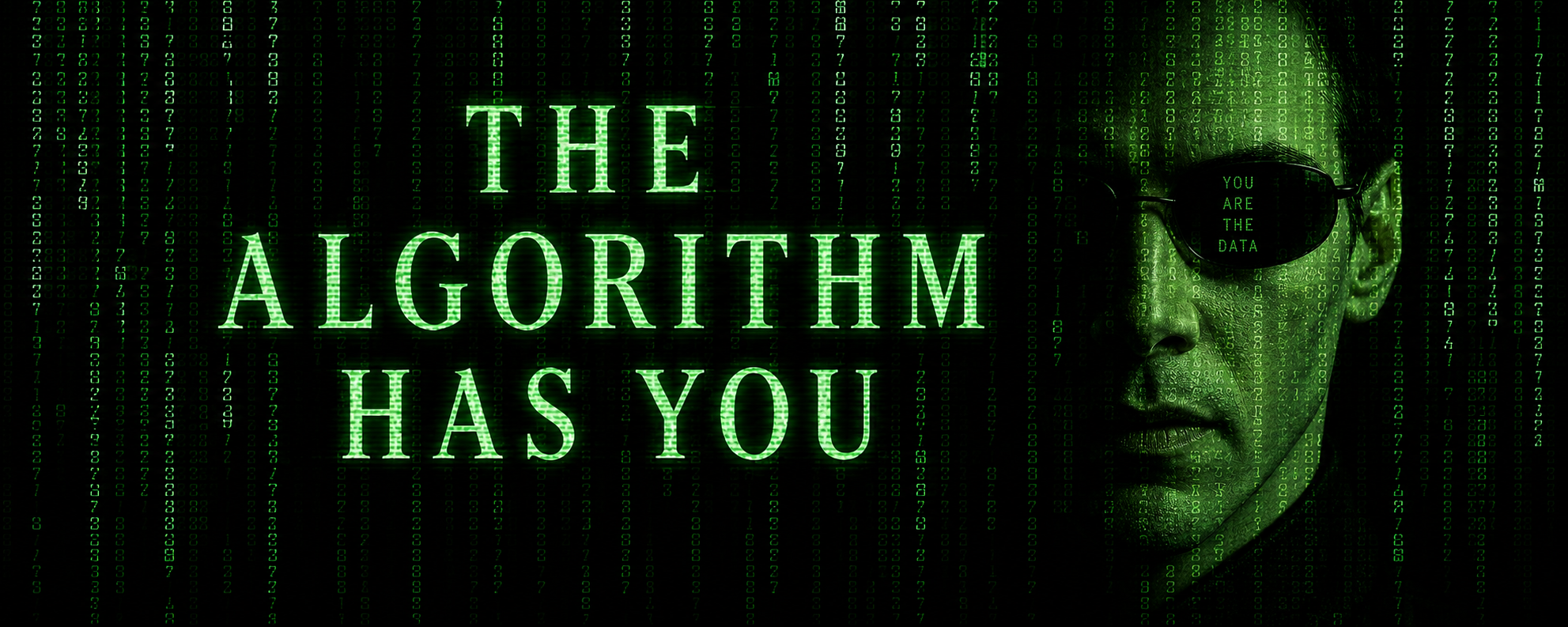
If you aren’t a sci-fi fan and you haven’t seen the Matrix series, the reference may allude you. In the movie, the main character played by Keanu Reeves is trapped in a computer simulation the movie calls “The Matrix.” Early in the movie, those who have been rescued from the computer simulation make contact with Mr. Smith (Neo). In that moment, using his own computer, the iconic line comes: The Matrix has you Neo.
If you are like me, and like the average American, something similar is playing out in your life. It isn’t some sinister computer program meant to enslave you in an artificial world of make believe, but it isn’t too far off from that. If you, like me, are spending countless hours a year on social media, the algorithm has you. Sadly, I have to confess that there have been moments where I have spent countless hours doom scrolling. Here are a few interesting thoughts about the algorithm commonly used by social media companies supplied by ChatGPT:
- Social media platforms are engineered to maximize engagement and time spent, using behavioral feedback from every swipe, pause, click, and replay to personalize what keeps users watching.¹
- Research shows emotionally charged content — especially anger, outrage, and fear — spreads faster and receives more engagement online than neutral content.²
- Infinite scrolling and unpredictable notifications exploit the brain’s reward-learning systems, reinforcing compulsive checking behavior through variable rewards similar to gambling mechanisms.³
- Recommendation systems collect and analyze thousands of micro-signals including watch time, dwell time, scrolling behavior, rewatches, and interaction patterns to predict what will hold attention longest.¹
- Studies suggest algorithmic systems can amplify content tied to insecurity, anxiety, loneliness, or emotional distress because emotionally reactive users engage more frequently.⁴
- Personalized feeds are optimized for engagement prediction, not necessarily truth, wisdom, or emotional health. What performs well algorithmically is often what keeps users emotionally activated.⁵
- Heavy exposure to rapid-fire short-form media is associated with reduced sustained attention and increased craving for constant novelty and stimulation.⁶
- Likes, shares, comments, and notifications activate reinforcement pathways in the brain associated with social reward and behavioral conditioning.⁷
- Researchers have documented that recommendation systems can gradually steer users toward more extreme or emotionally provocative material because stronger reactions generate stronger engagement metrics.⁸
- Many users believe they freely choose what they consume online, yet modern recommendation systems increasingly shape attention, habits, emotional states, and even perceptions beneath conscious awareness.⁹
Paul, warning our ancient brethren in Ephesus admonished them with a caution we would do well to heed: Look carefully then how you walk, not as unwise but as wise, making the best use of the time, because the days are evil. The impacts of social media in our lives may not be fully understood for decades. One thing is certain… today, many people struggle with far more anxiety, depression, anger, hopelessness, despair, insecurity, and a host of other emotional and mental symptoms because of the relentless consumption of social media. Paul, by the inspiration of the Holy Spirit, encourages us to “look carefully” at our lives, how we walk, or the sum total of our thoughts, actions, words, and practices, to ensure we are being wise.
Paul moves on to challenge us to make the best use of our time. I can’t know for sure, but I have to believe that we have even more ways to be distracted and waste time than the Ephesians could have ever dreamed of. According to a report from RAND back in 2019, the average American has over five hours of free time each day. Heartbreakingly, we take this precious free time and fill it with things that tear down, weigh down, and rob us of our peace, purpose, and joy.
This blog post is simply meant to help you (and me) reflect on the current reality of our lives. Over the past nine years I have felt an ongoing urge to shut down social media and to get off internet media and news. There have been times, by God’s grace, where I have been able to take a break from social media and news media. Antidotally, the impact has been undeniable. Emotionally and spiritually I have felt an invigoration that is hard to explain until you’ve experienced it yourself. Sadly, I find my way back and arrive at the same conclusion: My life is better off without social media and the 24/7 news media.
I want to leave you with a challenge: Take a break from social media for 30 days. Uninstall all your apps and take the time you are investing in social media and invest it into your walk with Christ, your family, your hobby, and things that are life giving. After 30 days of being free from the algorithm and the 24/7 influence of these things in your life, ask if you can really afford to continue sacrificing so much of your real life in a digital world that is numbing your mind, heart, and soul.
If you are up for a challenge, take a moment to review your screen time report on your smartphone. I bet you’ll be blown away by how much time you are truly giving away as you sacrifice your peace and joy in what feels like a digital prison. (For iPhone Screen Time Report | For Android Digital Wellbeing).
Finally, brothers, whatever is true, whatever is honorable, whatever is just, whatever is pure, whatever is lovely, whatever is commendable, if there is any excellence, if there is anything worthy of praise, think about these things. (Philippians 4:8 ESV)
References:
¹ Lindström, B., Bellander, M., Schultner, D., et al.
“A computational reward learning account of social media engagement.”
Nature Communications (2021)
https://www.nature.com/articles/s41467-020-19607-x
² Brady, W. J., Wills, J. A., Jost, J. T., Tucker, J. A., & Van Bavel, J. J.
“Emotion shapes the diffusion of moralized content in social networks.”
Proceedings of the National Academy of Sciences (PNAS) (2017)
https://www.pnas.org/doi/10.1073/pnas.1618923114
³ Clark, L., et al.
“Engineered highs: Reward variability and frequency as determinants of addictive potential.”
Addictive Behaviors (2023)
https://www.sciencedirect.com/science/article/pii/S0306460323000217
⁴ De Choudhury, M., Gamon, M., Counts, S., & Horvitz, E.
“Predicting Depression via Social Media.”
ICWSM / Association for the Advancement of Artificial Intelligence
https://www.microsoft.com/en-us/research/publication/predicting-depression-via-social-media/
⁵ Pew Research Center
“Algorithms in Action: What People See on Social Media.” (2018)
https://www.pewresearch.org/internet/2018/11/16/algorithms-in-action-the-content-people-see-on-social-media/
⁶ Wilmer, H. H., Sherman, L. E., & Chein, J. M.
“Smartphones and Cognition: A Review of Research Exploring the Links between Mobile Technology Habits and Cognitive Functioning.”
Frontiers in Psychology (2017)
https://www.frontiersin.org/articles/10.3389/fpsyg.2017.00605/full
⁷ Meshi, D., Tamir, D. I., & Heekeren, H. R.
“The Emerging Neuroscience of Social Media.”
Trends in Cognitive Sciences (2015)
https://www.sciencedirect.com/science/article/pii/S1364661315001270
⁸ Ribeiro, M. H., Ottoni, R., West, R., Almeida, V. A. F., & Meira Jr, W.
“Auditing Radicalization Pathways on YouTube.”
ACM Conference on Fairness, Accountability, and Transparency (2020)
https://dl.acm.org/doi/10.1145/3351095.3372879
⁹ Stanford Human-Centered AI (HAI)
“The Data Behind Your Doom Scroll.” (2024)
https://hai.stanford.edu/news/the-data-behind-your-doom-scroll-how-negative-news-takes-over-your-feed

1 Comment
False Events Appearing Real - Shoal Creek Baptist Church · July 31, 2026 at 3:37 pm
[…] you haven’t yet, I want to encourage you to check out this devotion I wrote recently about the dangers of social media. Imagine what your life and my life would look like if instead of filling our minds with an endless […]
Comments are closed.